Technology
Material Intelligence: the AI that understands the raw material.
Recycled raw materials are among the most diverse materials in industry. Material Intelligence analyzes them the way no manual check can: every delivery, every material flow, every shift, objectively and in real time. It is the AI at the core of every UpCircle™ product.
- 2M+
- Bales analyzed
- 24/7
- Analysis in every shift
- ISO 27001
- Certified information security
- ETH Zurich
- Official spin-off
Why Material Intelligence
The more variable the material gets, the less a few samples can tell you. That is where AI makes the difference.
Scalable
Recycled material varies from delivery to delivery and from supplier to supplier. The AI analyzes all of it, at the speed of your gate and your conveyor, without additional staff.
Objective
The same standard on every truck, in every shift and at every site. Results no longer depend on who is looking.
Self-learning
Each recording makes the models better. Improvements from across all installations flow into your system with regular updates, at no extra cost.
Gate to process
The same intelligence assesses deliveries at the truck and the material flow on the conveyor, so data from purchasing and production fits together.
Open for your data
Lab results, moisture measurements and process data can be added at any time. The AI connects them with what it sees.
Image evidence
Every result comes with the image it is based on. That makes claims, supplier talks and audits factual.
Scales wherever recycled materials are used
Recycled materials pass through a long chain of trading and processing. An AI that understands materials works along all of it, from the source to the consumer, and gets better with every new site.
Collectors and traders
Assess material objectively when buying and selling.
Recyclers and sorting plants
Document quality when baling and loading.
Paper and board mills
Control goods receipt and stock preparation.
Other recycling streams
The same principle for other materials, such as plastics.
Increasing accuracy
Every new site and every shift brings new data that improves the AI.
Every site makes the AI better for all
More sitesMore dataBetter modelsNew materials“Our employees use the system every day - data quality keeps improving and new optimization levers become visible.”What the AI measures
A selection of what Material Intelligence detects today. Each installation is trained and validated on your material.
Material grades
Grades according to standards such as DIN EN 643 for recovered paper, or according to your own specification, per delivery and in the running flow.
Material shares
The share of each material class in a delivery or on the belt, such as brown paper in recovered paper, measured instead of estimated.
Contaminants
Foreign components such as films, plastics, bottles, wood or metal, with photo evidence.
Composition and volume
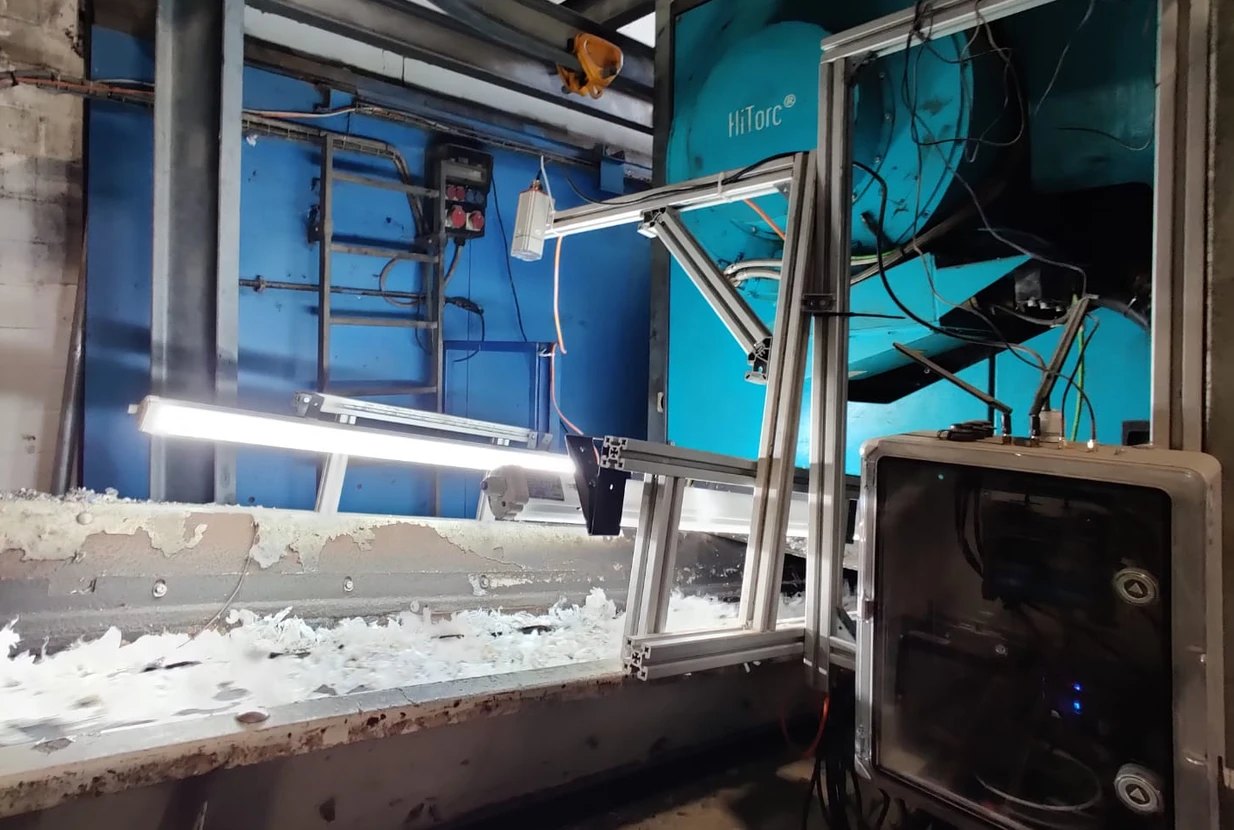
On the conveyor, the AI tracks composition, volume and further quality criteria of the running material flow.
Moisture and lab values
Moisture meters (compatible with the EMCO AP 500-M6 and Schaller Humimeter rP6) and lab measurements are linked to the delivery and analyzed together with the image data.
Powered by Material Intelligence
Material Intelligence doesn't sit in one place. It runs behind every UpCircle™ product.
UpCircle™ Go!
Bale analysis at the truck
UpCircle™ Station
Material flow analysis on the conveyor
UpCircle™ Deliveries
AI-verified goods receipt and claims
UpCircle™ MaterialFlow
What enters the plant, shift by shift
UpCircle™ SupplierInsights
Objective long-term supplier evaluation
UpCircle™ RecipeControl
Recipes based on real material quality
UpCircle™ Connect
Results in your ERP and process control
Powered by
Material Intelligence
From the research lab to the world
Material Intelligence was born at the Robotic Systems Lab of ETH Zurich, where eight theses laid its foundations. It brings together three fields of research: computer vision under harsh industrial conditions such as dust, vibration and changing light, learning from highly variable material streams, and reliable real-time inference on edge devices and in the cloud.
- A new measurement category: objective, non-invasive assessment of every delivery
- Strict experimental validation in the mills and against independent experts
- Industry-proven accuracy in changing environments
- Trained on millions of material images, and growing

Frequently asked questions
What is Material Intelligence?
UpCircle's AI for recycled materials, in daily use for recovered paper. It analyzes images and sensor data from the truck and the conveyor, detects grades, contaminants and further quality criteria, and makes the results available to purchasing, production and planning.
Does the AI work with our own grades?
Yes. The models are trained on standard grades such as DIN EN 643 and are fine-tuned on your internal specification during ramp-up. Custom criteria can be added as well.
Why not stick with drilling or manual checks?
Sampling methods only ever see a small fraction of the material and take minutes per bale. The AI covers every visible bale on every truck in seconds, objectively and with image evidence.
Can we add our lab and sensor data?
Yes. Lab results, moisture measurements and process data can be linked at any time, and with UpCircle™ Connect the results flow back into your ERP and process control.
Where is the data processed and how is it secured?
On servers in the EU, in line with the GDPR. UpCircle is ISO 27001 certified, and data is encrypted with TLS 1.3 and AES-256.
Who develops the technology?
UpCircle, an ETH Zurich spin-off from the Robotic Systems Lab, with a team of experts in material science, AI and mathematics. The development is supported by Innosuisse.
See what the AI sees
Tell us about your material and your questions. We'll show you what Material Intelligence can measure for you.